


Turning Tools
A turning tool is a hand tool used to remove material from a workpiece rotating on a wood lathe. There are tools used for spindle cutting – when cuts are made parallel to the axis of the part, to make cylindrical parts – and tools used for faceplate cutting – when cuts are made perpendicular to the axis of the part, to make bowls and other similar items. Each wood lathe turning tool will have a handle and a protruding blade. There is a wide range of tools, subvarieties of tools, and blade materials available on the market. Higher-end tools will typically deliver better accuracies and surface finishes.

What are wood turning tools called?
Wood turning is a process that utilizes hand tools to create wooden parts that are symmetrical about a center axis. This process is somewhat similar to the potter’s wheel, on which users revolve clay around an axis to create items like bowls and vases. Unlike a potter’s wheel, on which one’s hands are used to shape parts, wood lathes require wood-turning tools for the operator to create parts.
Wood lathe turning tools are hand tools that allow users to make different cuts to their workpieces. For example, spindle roughing gouges are used when first starting a turning job to quickly remove square corners, while parting tools are used to make final cuts and create intricate details. There are several types of handheld wood-turning tools. Each type is used to make a specific kind of cut or obtain a particular surface finish on a wooden workpiece.
A spindle roughing gouge is typically the first wood lathe turning tool used when starting a new project. For this particular tool, a wide U-shaped flute extends out from the grip. This tool allows users to quickly remove unwanted material and convert a square workpiece to a round one. By doing so, users can center their work on an axis running along the length of the workpiece. Spindle roughing gouges are often made from HSS (high-speed steel) and can come in many different sizes and prices.
Spindle gouges (shallow fluted gouges) are wood lathe turning tools that have a noticeably smaller-sized flute than roughing gouges. These tools are used to shape workpieces into desired shapes through the creation of features such as beads, coves, and ridges. The cutting edge of these tools is ground and beveled to obtain smooth surface finishes on workpieces. Spindle gouges can come in a variety of sizes and prices.
Skew chisels have a flat blade and are used for “planing” or creating smooth surfaces on wooden workpieces. Additionally, the skew chisel is used to finely remove material to obtain desired thicknesses and make shallow curves, v-cuts, and pummels. This wood lathe turning tool is notorious for being difficult to handle and requires patience to use correctly. It is recommended to use the tool at a 45° angle to the workpiece and avoid using the corners of the tool. Using the corners can cause the workpiece to “catch” – which can be potentially dangerous. However, once familiar with the tool, the skew chisel is one of the most useful and versatile wood-turning tools. This tool comes in many different sizes, blade shapes, and prices.
Parting tools are wood lathe turning tools that enable fine details to be created. This tool is characterized by its instantly recognizable profile. The tool has a straight and thin body with a steep chisel and faceted edges. The parting tool is often one of the final tools used in wood-turning projects. It’s used to remove the excess waste material and create precise details like filets, beads, and spigots.
Bowl gouges (deep-fluted gouges) are faceplate wood lathe-turning tools that are ideal for shaping the interior and exterior curves of bowls and similar items. Bowl gouges have a long, deep-fluted blade (deeper than a spindle gouge). The tip of the blade is either rounded or sharply pointed. Like other tools, different sizes and shapes of bowl gouges are ideal for different applications.
Scapers, like parting tools, are used for obtaining the final, desired surface finishes on turned bowls. In general, there are two types of scrapers and both are faceplate turning tools: square-nose and round-nose. Square-nose scrapers are used for finishing the outside of a bowl, while round-nose scrapers are used for finishing the inside of a bowl. While these are the two main types, there are other types for different applications. Scapers are useful because they can often reach areas that can’t be reached by other wood-turning tools.
Turning Tools Products Description
-
![Wood Turning Tools Carbide]() Wood Turning Tools CarbideWood turning tools carbideread more
Wood Turning Tools CarbideWood turning tools carbideread more
MATL:AL+SUS304
(1) 11" handle
(2) 10" longer handle extension three
(3) Swan Neck Hollower tool
(4) 8-3/8" shafts with a circle,... -
![Wood Turning Tools Carbide Tip]() Wood Turning Tools Carbide Tipwood turning tools carbide tipread more
Wood Turning Tools Carbide Tipwood turning tools carbide tipread more
MATL:AL+SUS304
(1) 11" handle
(2) 10" longer handle extension three
(3) Swan Neck Hollower tool
(4) 8-3/8" shafts with a circle,... -
![Wood Turning Chisels]() Wood Turning Chiselswood turning chiselsread more
Wood Turning Chiselswood turning chiselsread more
MATL:AL+SUS304
(1) 11" handle
(2) 10" longer handle extension three
(3) Swan Neck Hollower tool
(4) 8-3/8" shafts with a circle, square or... -
![Wood Turning Tool Set]() Wood Turning Tool SetWood turning tool setread more
Wood Turning Tool SetWood turning tool setread more
MATL:AL+SUS304
(1) 11" handle
(2) 10" longer handle extension three
(3) Swan Neck Hollower tool
(4) 8-3/8" shafts with a circle, square or diamond ... -
![Carbide Wood Turning Tools]() Carbide Wood Turning ToolsCarbide wood turning toolsread more
Carbide Wood Turning ToolsCarbide wood turning toolsread more
MATL:AL+SUS304
(1) 11" handle
(2) 10" longer handle extension three
(3) Swan Neck Hollower tool
(4) 8-3/8" shafts with a circle, square or... -
![Wood Turning Tools]() Wood Turning ToolsWood Turning Toolsread more
Wood Turning ToolsWood Turning Toolsread more
MATL: AL+SUS304
(1) 11" handle
(2) 10" longer handle extension three
(3) Swan Neck Hollower tool
(4) 8-3/8" shafts with a circle, square or diamond ...


Hangzhou Qina Technology Co., Ltd
As a professional hardware and tools supplier in China, began to produce power tools in 2005, and started with domestic and local sales. Began to carry out foreign trade exports in 2009, with excellent quality, service, and reasonable price, and got many domestic and foreign customers. In 2010, our company developed into one of China's most promising foreign trade and export companies.
Our company has a professional product R&D team, which has gained the trust of the society with excellent service quality and good reputation in this industry. We will always adhere to the principle of honest cooperation, serve customers well, and solve problems for customers.
The main products produced by our factory itself are power tools and tool kits, Other garden tools, hand tools, auto supplies, and pneumatic tools have also been made for more than ten years. We have cooperated with more than 100 powerful suppliers to provide customers with one-stop service. and provide the best quality items with the best prices. By cooperating with us, you can save a lot of time and labor on finding the most suitable and best products.
Business scope includes power tools, hand tools, Garden tools, hardware, household appliances and accessories manufacturing, processing, marketing; Import and export of goods, and technology service.
Certifications

CE Certificate
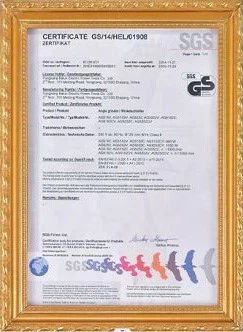
GS Certificate

CQC Certificate

CCC Certificate

CE Certificate

GS Certificate
Turning tools can be used to make spindle parts – or cylindrical parts that are symmetrical about the axis of rotation. Some examples of spindle parts include table legs, baseball bats, fence spindles, chairs, and lamps. Turning tools can also be used to make faceplate parts – or parts that are mounted via the headstock or a faceplate. This tool allows workpieces to easily be hollowed out to form bowls, cups, vases, and other similar items.
Wood lathe turning tools are easily identifiable by their shape and blade.
Gouges are round and cylindrical-shaped tools, while chisels, parting tools, and scrapers are flat bar-shaped tools.
Gouges are distinguishable based on the size of their flute. Spindle roughing gouges have wide, U-shaped flutes; spindle gouges have narrow, shallow, U-shaped flutes; and bowl gouges have deep, U-shaped flutes.
Chisels, parting tools, and scrapers are distinguishable based on the shape of their blades. Chisels have two flat, grounded cutting edges that come to a point. Parting tools have cutting edges that come to a point from all sides and resemble an arrow. Scrapers simply look like flat bars.
Different wood lathe turning tools have different uses and hence necessitate different techniques and grips.
Position your hands so there is no way they can contact the workpiece. Use your dominant hand to handle the tool and your other hand to rest it and hold it firmly against the tool rest and workpiece. Make sure your non-dominant hand is lower than your dominant hand. This method will allow you to cut at an angle and ensure the workpiece is always contacting the cutting edge of the tool.
Ensure the turning tool is always contacting the tool rest. Minimize the distance between the rest and the workpiece to about ¼ inch.
Ensure that the bevel of the cutting tool is behind the blade when cutting. This will help prevent removing too much material at one time and also help prevent the tool from “catching” the workpiece.
Cut with the grain, not against it. Always start cuts from the outside edges of the workpiece towards the center. Not doing so is considered cutting “uphill,” or against the grain, and can make it much harder to control the tool.
Yes, it is easy to use turning tools, as learning the basics of woodturning is not difficult. However, becoming a master at the craft will take hundreds of hours of practice. When first starting to learn wood turning, it’s important to first learn the basics (lathe speeds, cut angles, hand grips, etc.), what the different cutting tools are what they’re used for, and how to use those tools. With time, wood-turning skills can become second nature.
As one of the leading turning tools manufacturers and suppliers in China, we warmly welcome you to wholesale cheap turning tools from our factory. All our products are with high quality and competitive price. Contact us for more details.
Wood Turning Tools Carbide, Wood Turning Tools, Carbide Wood Turning Tools